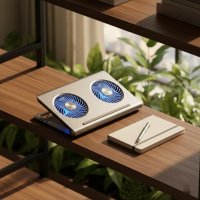
Is your laptop feeling hotter than usual, slowing down, or making more noise than an old engine? The silent killer of laptop performance is often overheating. Before you consider replacing your trusty machine, let me introduce you to a powerful, portable solution: the mini cooler laptop. These compact devices are game-changers, designed to efficiently combat heat, boost your laptop’s performance, and extend its lifespan, all while maintaining a small footprint. At Tselk, we understand that keeping your laptop cool isn’t just about comfort; it’s about optimizing every aspect of its operation.
What Exactly is a Mini Laptop Cooler?
A mini laptop cooler, unlike its larger cooling pad counterparts, is specifically engineered for portability and targeted heat management. Think of it as a focused thermal ally for your laptop. While traditional cooling pads typically sit beneath the entire laptop, blowing air upwards, mini coolers often adopt a more direct approach. The most common type is the vacuum-style external extracting cooling fan, which attaches directly to your laptop’s exhaust vents. It actively sucks hot air out, rather than just pushing cool air in. Then there are also ultra-compact fan stands that offer elevation and a small, directed airflow. For compare top laptop cooling on this site.
- What types of mini laptop coolers are there?
Primarily, you’ll find vacuum-style extractors that actively pull hot air from your laptop’s exhaust vents, and compact, minimalist fan-based stands that provide elevation and some targeted airflow.
These smaller coolers often boast impressive RPMs (rotations per minute), like the KLIM Cool Vacuum Laptop Cooler reaching up to 4200 RPM, indicating a strong capability to move air. This focused design means they can be incredibly effective at reducing component temperatures, especially in scenarios where internal fans struggle to expel heat quickly enough.
Why Your Laptop Needs a Mini Cooling Sidekick
Heat is the arch-nemesis of any electronic device, and laptops, with their confined spaces, are particularly susceptible. When your laptop gets too hot, its internal components, like the CPU and GPU, will “throttle” their performance to prevent damage. This means slower speeds, frustrating lag, and reduced frame rates in games. A mini cooler laptop acts as a crucial sidekick, offering a multitude of benefits:
- Prevent Overheating: The most direct and critical benefit. By actively removing or dissipating heat, a mini cooler helps maintain your laptop’s operating temperature within safe limits, safeguarding sensitive components from thermal stress.
- Boost Performance: When temperatures are kept in check, your laptop’s CPU and GPU can operate at their intended clock speeds, preventing thermal throttling. This translates directly to smoother multitasking, faster application loading, and a much more responsive gaming experience.
- Extend Laptop Lifespan: Persistent high temperatures can significantly shorten the lifespan of your laptop’s internal components. By mitigating heat buildup, a mini cooler can help you squeeze years of extra life out of your device, saving you money in the long run.
- Enhanced Comfort: Nobody enjoys a scorching hot laptop on their lap or desk. A mini cooler ensures that your workspace and, more importantly, your skin, remain comfortable, even during intense usage.
- Portability: This is where “mini” truly shines. These coolers are designed to be lightweight and compact, easily fitting into your laptop bag alongside your other essentials. Whether you’re working from a coffee shop, traveling, or simply moving between rooms, a mini cooler can come with you.
“From my decade of experience, I’ve seen countless laptops succumb to the silent erosion of heat,” says Dr. Anya Sharma, Lead Thermal Engineer at Tselk. “A well-chosen mini laptop cooler isn’t just an accessory; it’s an essential tool for preserving performance and longevity, especially for demanding users. It’s about being proactive, not reactive, to thermal challenges.”
Navigating the Market: Choosing the Right Mini Cooler for Your Laptop
|
Our Picks for the Best Laptop Cooler in 2026
As an Amazon Associate I earn from qualifying purchases.
|
||
| Num | Product | Action |
|---|---|---|
| 1 | AICHESON Laptop Cooling Pad 5 Fans Up to 17.3 Inch Heavy Notebook Cooler, Blue LED Lights, 2 USB Ports, S035, Blue-5fans |

|
| 2 | Kootek Laptop Cooling Pad, Laptop Cooler with 5 Quiet Fans for 12\"-17\" Computer PC Notebook Gaming Laptop Fan, Height Adjustable Laptop Cooling Stand Laptop Accessories, Blue |
|
| 3 | llano V12 Laptop Cooling Pad, Gaming Laptop Cooler Stand with 5.5inch Powerful Turbo Fan, Adjustable Speed, Touch Control, 3-Port USB A, for Fast Cooling Laptop 15.6-19in, Black (No RGB) |
|
| 4 | havit HV-F2056 15.6\"-17\" Laptop Cooler Cooling Pad - Slim Portable USB Powered (3 Fans), Black/Blue |
|
| 5 | ChillCore Laptop Cooling Pad, RGB Lights Laptop Cooler 9 Fans for 15.6-19.3 Inch Laptops, Gaming Laptop Fan Cooling Pad with 8 Height Stands, 2 USB Ports - A21 Blue |
|
| 6 | KeiBn Laptop Cooling Pad, Gaming Laptop Cooler 2 Fans for 10-15.6 Inch Laptops, 5 Height Stands, 2 USB Ports (S039) |
|
| 7 | Razer Laptop Cooling Pad: Adaptive Smart - Intelligent Fan Control - Airtight Pressure Chamber - Fits Most Laptops & Macbooks 14” to 18\" - Preset & Custom Fan Curves - 3 Port USB Type A - Chroma RGB |
|
| 8 | Laptop Cooling Pad, Gaming Laptop Cooler for 13-19 Inch Laptops, RGB Lights Laptop Fan Cooling Pad with 3 Height Adjustable and 3 USB Ports, 4.72 Inch Large Turbo Fan, Max 3500RPM |
|
| 9 | llano V12 RGB Laptop Cooling Pad, Gaming Laptop Cooler with 5.5 Inch Powerful Turbofan, Fast Cooling Laptop 15.6-21in, Adjustable Speed, Touch Control, LCD Screen, Black (RGB) |
|
| 10 | Laptop Cooling Pad, Laptop Cooler 6 Quiet Fans for 12\"-17\" Laptops, Gaming Laptop Fan Cooling Pad with 5 Height Adjustable, Slim Portable USB Powered, 2 USB Ports & Phone Holder |
|
Selecting the perfect mini cooler laptop isn’t a one-size-fits-all endeavor. Several factors come into play to ensure you get the most effective solution for your specific needs:
-
Compatibility is Key: Vent Placement and Laptop Size
Mini vacuum coolers are most effective when they can create a tight seal around your laptop’s exhaust vents. Check if your laptop has side vents, which are typically where these coolers attach. Some vacuum coolers come with different rubber adapters to fit various vent shapes and sizes. Also, ensure the cooler’s overall dimensions are suitable for your laptop, especially if it’s a smaller notebook. A cooler that’s too big might obstruct other ports or feel cumbersome. -
Cooling Power (RPM & Airflow): The Heart of the Matter
Look for specifications like fan speed (RPM) and airflow. Higher RPM generally means more air movement and better cooling. For example, some models can reach 3000-4200 RPM, offering a substantial cooling boost. However, don’t just chase the highest numbers; consider how efficiently the air is directed and extracted. Some mini-turbo coolers have demonstrated a temperature drop of 10-14°C under heavy loads. -
Noise Levels: Performance vs. Quiet Operation
More powerful fans often mean more noise. While some high-RPM coolers can be quite loud at their peak, many newer models incorporate noise-reduction features or allow for adjustable fan speeds. A cooler running at 1500 RPM will be significantly quieter than one at 3500 RPM, offering a balance for less demanding tasks. User reviews often provide excellent insights into real-world noise performance. -
Power Source: USB-Powered Convenience
Most mini laptop coolers are conveniently powered via a USB port on your laptop. Some may include a passthrough USB port, so you don’t lose a valuable port. This makes them incredibly easy to use, requiring no external power adapter. -
Build Quality & Durability: An Investment That Lasts
Look for coolers made from durable materials like ABS plastic and metal. A sturdy build ensures the cooler can withstand being carried around and provides reliable protection for your laptop. Brands like KLIM often offer extended warranties, reflecting confidence in their product’s longevity. -
How do I choose a good mini cooler for my laptop?
To choose a good mini cooler, identify your laptop’s vent locations for optimal compatibility, check the cooler’s fan speed (RPM) and noise levels, confirm it’s USB-powered if you value convenience, and assess its build quality for durability.
Mini Cooler vs. Traditional Cooling Pad: What’s the Difference?
The terms “mini cooler” and “cooling pad” are sometimes used interchangeably, but there are distinct differences, especially when discussing a “mini cooler laptop.”
-
Mini Cooler (Vacuum/Side-Mount): These devices are typically smaller and attach directly to a laptop’s exhaust vent. Their primary mechanism is active heat extraction – they literally suck hot air out of your laptop. This method can be highly effective for specific laptops with well-placed side vents, as it directly addresses the heat leaving the system. They are designed for maximum portability and targeted cooling.
- Pros: Direct heat extraction, very effective for compatible laptops, extremely portable.
- Cons: May not fit all vent designs, can be noisy at high speeds, usually only cools one part of the laptop.
-
Traditional Cooling Pad (Under-Laptop Fans): These are larger, flat platforms with one or more fans that sit underneath your laptop. They primarily work by providing general airflow to the underside of the laptop and elevating it. This elevation itself offers passive cooling by improving air circulation around the chassis. They are often more versatile in terms of laptop size compatibility but may not be as directly effective at expelling internal heat as a vacuum cooler.
- Pros: Offers both active (fan) and passive (elevation) cooling, broad compatibility, can cool the entire underside.
- Cons: Less portable, may not create a strong enough airflow for deep internal cooling, can be bulky.
-
Are mini laptop coolers better than cooling pads?
It depends on your laptop’s design and your usage. Mini vacuum coolers excel at direct heat extraction from side vents, often achieving significant temperature drops. Cooling pads, on the other hand, provide general airflow and elevation, benefiting laptops with bottom vents or those needing overall cooling and ergonomic support. For targeted heat reduction, a mini vacuum cooler can be superior if your laptop has the right vents.
Choosing between them often boils down to your laptop’s specific vent design and your portability needs. For targeted, on-the-go thermal management, a mini cooler laptop is hard to beat.
Getting the Most Out of Your Mini Laptop Cooler: Usage & Maintenance Tips
Even the best mini cooler laptop won’t perform optimally without proper use and regular care. Here are some pro tips to maximize its effectiveness:
-
Proper Placement is Paramount: For vacuum-style coolers, ensure a snug, airtight seal between the cooler and your laptop’s exhaust vent. Any gaps will reduce its efficiency. For compact fan stands, position the fans to blow directly into your laptop’s intake vents, usually located on the bottom or sides.
-
Cleanliness is Crucial: Dust is the enemy of efficient cooling. Over time, your cooler’s fans and your laptop’s internal vents will accumulate dust, impeding airflow. Regularly use compressed air to blow out dust from both your mini cooler and your laptop’s vents. A small brush can also help remove stubborn debris.
-
Optimal Settings: Many mini coolers offer adjustable fan speeds. Experiment to find the sweet spot between cooling performance and noise levels for your specific task. You might need maximum RPM for gaming but can dial it down for lighter work.
-
Combine with Other Best Practices: A mini cooler is a powerful tool, but it works even better in conjunction with other cooling strategies.
- Always place your laptop on a hard, flat surface to allow for proper airflow underneath. Avoid soft surfaces like blankets or carpets.
- Close unnecessary background applications to reduce the CPU/GPU workload and, consequently, heat generation.
- Ensure your laptop’s internal fans are also clean and functioning correctly. Consider a professional cleaning if you suspect significant internal dust buildup.
-
How often should I clean my mini laptop cooler?
You should clean your mini laptop cooler regularly, especially if you use it frequently or in dusty environments. Aim for a quick dusting with compressed air every few weeks, or whenever you notice reduced performance or visible dust accumulation.
Frequently Asked Questions (FAQ)
1. Do mini laptop coolers really work?
Yes, mini laptop coolers, particularly the vacuum-style extractors, can be very effective at reducing laptop temperatures by actively pulling hot air out of your system, leading to improved performance and longevity.
2. Can a mini laptop cooler damage my laptop?
When used correctly, a mini laptop cooler should not damage your laptop. However, ensure it doesn’t block any essential intake vents or create excessive negative pressure that could strain internal components. Regular cleaning prevents dust from being blown into your laptop.
3. What’s the ideal temperature range for a laptop?
Ideally, your laptop’s CPU and GPU temperatures should remain below 70-80°C (158-176°F) under load. Sustained temperatures above 90°C (194°F) can lead to thermal throttling and long-term component degradation.
4. Are mini coolers suitable for gaming laptops?
Absolutely. Gaming laptops are notorious for generating significant heat, making mini coolers an excellent choice for preventing thermal throttling and maintaining peak performance during intense gaming sessions. Many “mini-turbo” coolers are specifically marketed towards gamers.
5. How much temperature drop can I expect from a mini cooler?
The temperature drop varies widely depending on the cooler’s design, your laptop’s specific cooling system, and the ambient temperature. However, users often report drops ranging from 5°C to 20°C (9°F to 36°F) under load, which can make a substantial difference.
Keep Your Cool, Elevate Your Experience
In the fast-paced world of computing, keeping your laptop cool isn’t just a luxury; it’s a necessity. A mini cooler laptop is an investment in your device’s health, performance, and longevity, offering a compact yet powerful solution to one of technology’s most persistent challenges. By understanding how these clever devices work and integrating them into your routine, you’ll unlock a smoother, more efficient, and ultimately more enjoyable computing experience.
Don’t let heat slow you down. Explore the world of mini cooler laptops and discover the perfect thermal partner for your machine. For more in-depth insights and expert advice on all things laptop cooling, be sure to visit us at Tselk.com – your trusted source for keeping your tech cool.
Get our weekly buyer guide
Practical specs, not advice. Unsubscribe anytime.